
Common Bookkeeping Mistakes That Cost Canadian Businesses Money
Discover the most common bookkeeping mistakes that can hurt your cash flow, increase CRA risks, and reduce profits. Learn how to avoid costly bookkeeping errors.
7/20/20267 min read
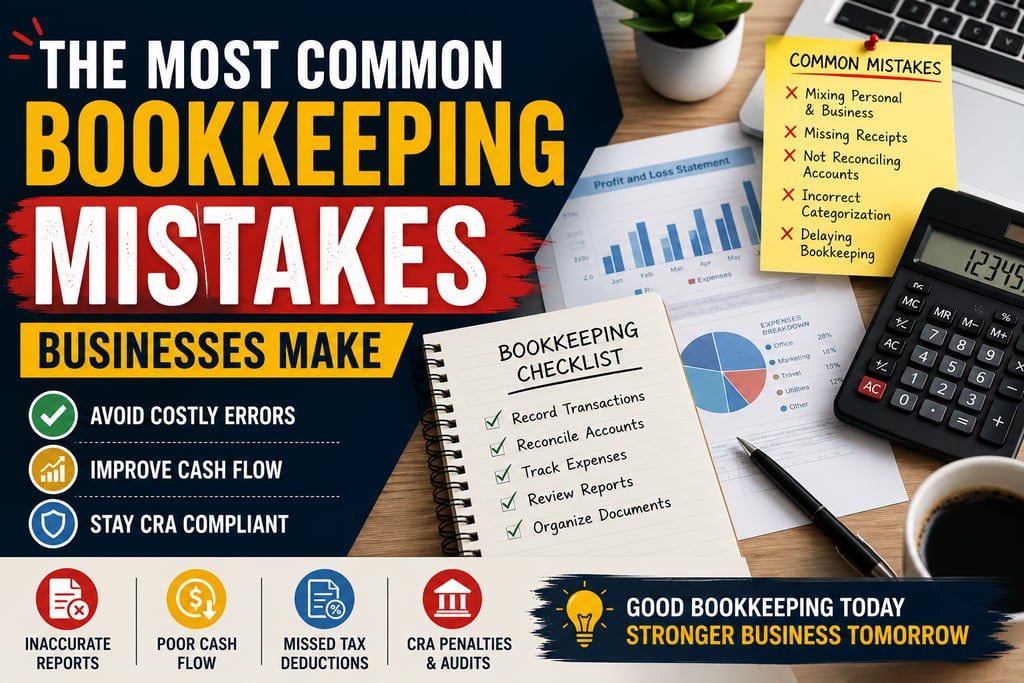
Bookkeeping is one of the most important responsibilities for any business, yet it's often overlooked until problems arise. Even small bookkeeping errors can lead to inaccurate financial reports, poor cash flow management, missed tax deductions, and costly Canada Revenue Agency (CRA) penalties. Over time, these mistakes can affect profitability and make it difficult to understand the true financial health of your business.
Understanding the common bookkeeping mistakes that businesses make is the first step toward avoiding them. Whether you're a small business owner, entrepreneur, contractor, or self-employed professional, maintaining accurate financial records helps you make informed decisions, stay compliant with CRA requirements, and prepare for tax season with confidence.
In this guide, we'll explore the most frequent bookkeeping errors, explain how they impact your business, and share practical tips to help you keep your finances organized throughout the year.
Why Accurate Bookkeeping Matters
Bookkeeping is more than recording numbers in accounting software. It provides the financial information you need to manage your business effectively and plan for future growth. Accurate bookkeeping supports everything from daily operations to long-term financial planning.
Better Financial Visibility
Reliable bookkeeping gives you a clear picture of your business's financial position.
With accurate records, you can easily see:
Monthly revenue
Operating expenses
Outstanding invoices
Business debts
Overall profitability
Having access to current financial information allows you to identify trends and make proactive business decisions instead of reacting to unexpected financial problems.
Improved Cash Flow Management
Cash flow is essential for keeping your business running smoothly.
Consistent bookkeeping helps you:
Monitor customer payments
Track supplier invoices
Plan upcoming expenses
Identify overdue accounts
Forecast future cash needs
When cash flow is monitored regularly, businesses are better prepared to manage slow periods and invest confidently in growth opportunities.
CRA Compliance
Canadian businesses are required to maintain complete and accurate financial records for tax reporting purposes.
Proper bookkeeping helps ensure:
Income is recorded correctly
Business expenses are documented
GST/HST records remain accurate
Payroll records are complete
Supporting documents are organized
Good record keeping makes it easier to meet CRA reporting requirements and reduces the risk of audits, penalties, or filing errors.
Easier Tax Filing
Businesses that update their books consistently throughout the year experience far less stress during tax season.
Accurate bookkeeping provides organized financial information for:
Personal tax filing
Business tax filing
Corporate tax returns
GST/HST returns
Financial statements
Instead of searching for missing receipts and invoices, you can focus on reviewing complete financial records before filing.
Better Business Decisions
Successful businesses rely on accurate financial data—not assumptions.
Monthly bookkeeping helps answer important questions like:
Is the business making a profit?
Which expenses are increasing?
Can we afford new equipment?
Is hiring another employee realistic?
Are sales improving month over month?
Without reliable bookkeeping, these decisions become much more difficult.
The Most Common Bookkeeping Mistakes Businesses Make
Even experienced business owners can develop bookkeeping habits that create financial problems over time. The following bookkeeping mistakes are among the most common—and often the most expensive.
1. Mixing Personal and Business Expenses
Using one bank account or credit card for both personal and business purchases creates confusion and makes financial reporting much more difficult.
This can result in:
Incorrect expense reporting
Missed tax deductions
Difficult bank reconciliations
Inaccurate financial statements
Opening dedicated business bank accounts and credit cards is one of the simplest ways to improve bookkeeping accuracy.
2. Failing to Reconcile Bank Accounts
Bank reconciliation ensures that your accounting records match your actual bank statements.
Skipping this step can lead to:
Missing transactions
Duplicate entries
Incorrect account balances
Undetected banking errors
Reconciling accounts every month helps identify discrepancies before they become larger financial issues.
3. Losing Receipts and Invoices
Receipts and invoices provide essential evidence for business expenses and tax deductions.
When important documents are lost, businesses may:
Miss deductible expenses
Struggle during tax preparation
Have difficulty responding to CRA requests
Spend unnecessary time searching for records
Using digital receipt management tools can help keep documentation organized and easily accessible.
4. Delaying Bookkeeping Updates
Many business owners postpone bookkeeping because they're busy managing daily operations.
Unfortunately, waiting several months to update financial records often leads to:
Forgotten transactions
Missing paperwork
Rushed tax preparation
Increased bookkeeping costs
Greater risk of reporting errors
Completing bookkeeping weekly or monthly makes the process much more manageable and accurate.
5. Incorrect Expense Categorization
Placing expenses into the wrong categories can distort your financial reports and create problems during tax season.
Examples include:
Recording equipment purchases as office supplies
Misclassifying vehicle expenses
Categorizing personal expenses as business expenses
Incorrectly recording contractor payments
Using consistent expense categories improves reporting accuracy and ensures financial statements reflect the true performance of your business.
6. Ignoring GST/HST Records
Businesses registered for GST/HST must carefully track the tax they collect from customers and the tax they pay on eligible business expenses.
Poor GST/HST record keeping can result in:
Incorrect tax filings
Missed Input Tax Credits (ITCs)
Cash flow issues
CRA reassessments
Interest and penalties
Updating GST/HST records regularly makes filing more accurate and helps avoid unexpected liabilities.
7. Payroll Errors
Payroll mistakes can have serious consequences for both employees and employers.
Common payroll issues include:
Incorrect wage calculations
Missing overtime payments
Inaccurate CPP or EI deductions
Late payroll remittances
Incomplete payroll records
Maintaining accurate payroll records helps businesses meet CRA obligations while ensuring employees are paid correctly and on time.
8. Not Reviewing Financial Reports
Some businesses record transactions but rarely review the reports generated from their bookkeeping system.
Important reports such as your:
Profit and Loss Statement
Balance Sheet
Cash Flow Statement
Accounts Receivable Report
provide valuable insights into your business performance.
Reviewing these reports every month helps identify problems early, monitor profitability, and make informed financial decisions before issues affect your bottom line.
How These Mistakes Can Cost Your Business Money
Bookkeeping errors may seem minor at first, but they often have significant financial consequences. Inaccurate records can affect cash flow, reduce profitability, create tax issues, and limit your ability to make informed business decisions.
CRA Penalties and Interest
The Canada Revenue Agency (CRA) expects businesses to maintain complete and accurate financial records. Missing documentation, incorrect GST/HST reporting, or late payroll remittances can result in:
Interest charges
Financial penalties
Additional reviews or audits
Time-consuming corrections
Keeping your books updated throughout the year reduces the risk of costly compliance issues.
Missed Tax Deductions
Poor record keeping often means businesses overlook legitimate deductible expenses.
Examples include:
Business travel
Office supplies
Professional services
Vehicle expenses
Software subscriptions
Without proper receipts or accurate expense categorization, you may end up paying more tax than necessary.
Cash Flow Problems
When bookkeeping isn't current, it's difficult to know how much cash is available.
This can lead to:
Late supplier payments
Overdue customer invoices
Unexpected cash shortages
Difficulty covering payroll
Missed growth opportunities
Regular bookkeeping helps business owners monitor cash flow and plan ahead with confidence.
Poor Budgeting and Financial Planning
Budgets are only as accurate as the financial data behind them.
Bookkeeping mistakes can cause businesses to:
Overestimate profits
Underestimate expenses
Make poor investment decisions
Delay important business purchases
Reliable bookkeeping provides the accurate information needed to create realistic budgets and support long-term growth.
Inaccurate Financial Reports
Financial statements guide many important business decisions.
If bookkeeping records are incomplete or incorrect, reports such as your Profit and Loss Statement, Balance Sheet, and Cash Flow Statement may not accurately reflect your business performance.
This can affect:
Loan applications
Investor confidence
Business planning
Tax preparation
Overall profitability
How to Avoid Common Bookkeeping Mistakes
Fortunately, most bookkeeping mistakes are preventable with a consistent process and the right tools.
Keep Records Updated Weekly
Instead of waiting until month-end or tax season, record transactions every week.
Regular updates make it easier to:
Catch errors early
Stay organized
Reduce stress
Prepare accurate reports
Separate Business and Personal Finances
Maintain separate business bank accounts and credit cards to avoid confusion and improve reporting accuracy.
This simple step also makes tax preparation much easier.
Use Cloud Bookkeeping Software
Modern cloud accounting platforms help automate many bookkeeping tasks.
Benefits include:
Automatic bank feeds
Secure document storage
Real-time financial reporting
Easier collaboration with your bookkeeper
Access to financial information from anywhere
Cloud bookkeeping also reduces the risk of lost paperwork and manual data entry errors.
Save Receipts Digitally
Scanning or photographing receipts immediately after purchases helps create a complete digital record.
Digital storage makes documents easier to organize, search, and retrieve if requested by the CRA.
Reconcile Accounts Every Month
Monthly bank and credit card reconciliations help identify:
Missing transactions
Duplicate entries
Bank errors
Incorrect balances
Reconciling regularly ensures your accounting records remain accurate.
Review Financial Reports Regularly
Don't just generate reports—review them.
Monthly financial reviews help you:
Monitor profitability
Track expenses
Improve cash flow
Identify unusual transactions
Make informed business decisions
Work With a Professional Bookkeeper
As your business grows, bookkeeping becomes more complex.
Working with an experienced bookkeeper provides:
Accurate financial records
Consistent reporting
Improved CRA compliance
Time savings
Greater confidence in your financial information
Why Professional Bookkeeping Services Make a Difference
Professional bookkeeping is an investment in the long-term health of your business. Rather than spending valuable time managing financial records yourself, you can focus on serving customers and growing your company.
Professional bookkeeping services help businesses:
Improve bookkeeping accuracy
Reduce costly financial errors
Save valuable administrative time
Prepare organized records for tax season
Maintain CRA compliance
Produce reliable monthly financial reports
With accurate financial information available year-round, business owners can make better decisions, respond quickly to challenges, and plan for future growth with confidence.
How TiKi Tax Helps Small Businesses Stay Organized
For many entrepreneurs and small business owners, keeping financial records current can be challenging while managing day-to-day operations. That's where professional support can make a meaningful difference.
At TiKi Tax, we provide personalized bookkeeping solutions for businesses throughout Kelowna, Penticton, West Kelowna, Summerland, Peachland, Lake Country, Oliver, and Osoyoos.
Our services include:
Professional bookkeeping
Small business bookkeeping
Payroll services
GST/HST tracking and filing support
Financial statement preparation
Cloud bookkeeping solutions
Ongoing CRA compliance assistance
We work closely with business owners to ensure financial records remain accurate, organized, and ready for tax season. Our goal is to simplify bookkeeping so you can spend more time growing your business and less time managing paperwork.
Conclusion
Avoiding common bookkeeping mistakes is one of the best ways to protect your business's financial health. Accurate bookkeeping improves cash flow, supports better decision-making, reduces the risk of CRA penalties, and makes tax season far less stressful.
By updating your books regularly, organizing receipts, reconciling accounts, and reviewing financial reports each month, you can avoid costly errors that affect profitability and long-term growth.
If you need expert support, TiKi Tax offers reliable bookkeeping services tailored to the needs of businesses across British Columbia. Whether you need help with monthly bookkeeping, payroll, GST/HST tracking, or financial reporting, our experienced team is here to help you stay organized, compliant, and focused on growing your business.
Frequently Asked Questions
1. What are the most common bookkeeping mistakes?
Some of the most common bookkeeping mistakes include mixing personal and business expenses, failing to reconcile bank accounts, losing receipts, delaying bookkeeping updates, incorrectly categorizing expenses, ignoring GST/HST records, and not reviewing financial reports regularly.
2. Why is accurate bookkeeping important?
Accurate bookkeeping helps businesses monitor cash flow, prepare reliable financial statements, stay compliant with CRA requirements, reduce tax filing errors, and make informed financial decisions.
3. How often should bookkeeping be updated?
Most businesses should update their bookkeeping weekly or monthly. Regular updates improve accuracy, simplify tax preparation, and prevent small errors from becoming major problems.
4. Can bookkeeping mistakes lead to CRA penalties?
Yes. Inaccurate records, missed GST/HST reporting, payroll errors, or incomplete documentation can result in CRA interest charges, penalties, or additional reviews.
5. Should I hire a professional bookkeeper?
Hiring a professional bookkeeper can save time, improve financial accuracy, reduce compliance risks, and provide valuable insights into your business's financial performance. It's especially beneficial for growing businesses with increasing transaction volumes.
TiKi Tax
© 2025. All rights reserved.