
Common Triggers for CRA Reviews
Learn the most common triggers for CRA reviews and how to avoid them. Understand what flags your tax return and steps to stay compliant with the Canada Revenue Agency.
12/2/20252 min read
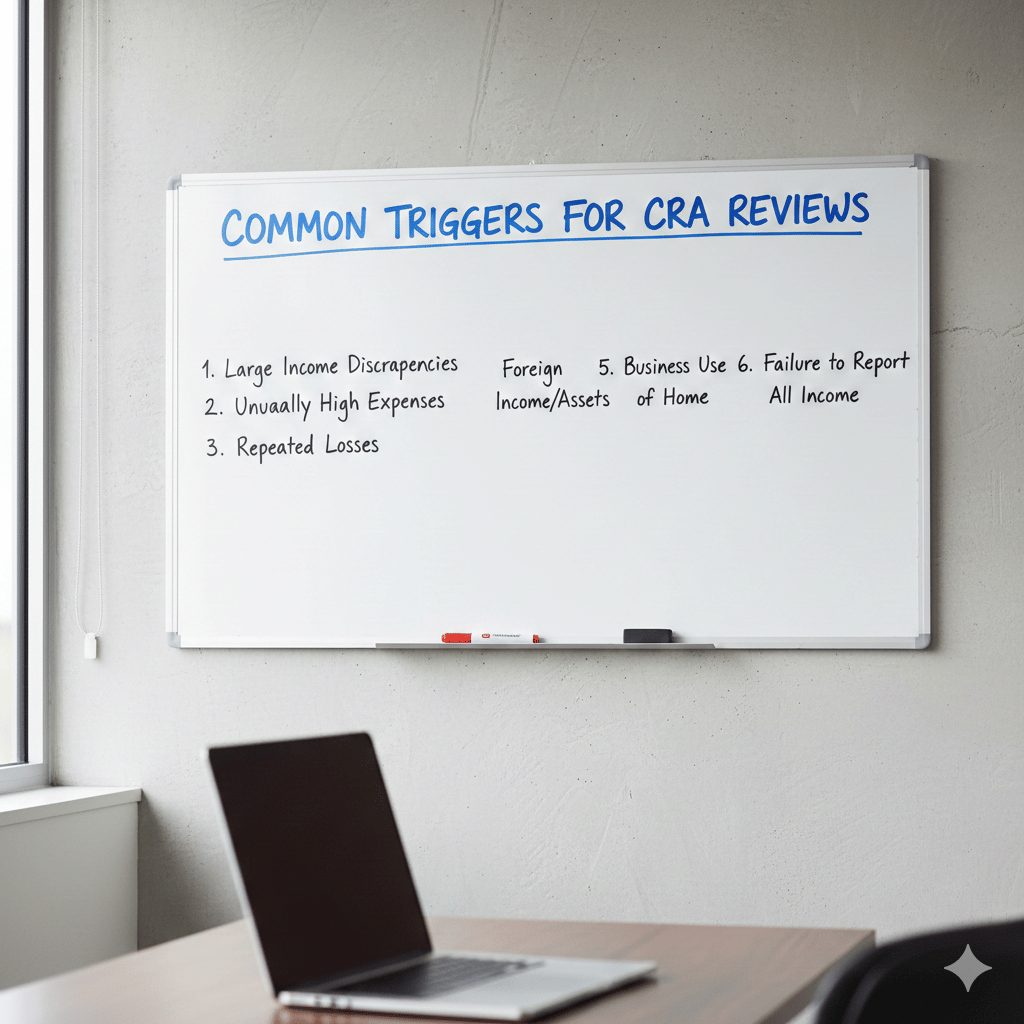
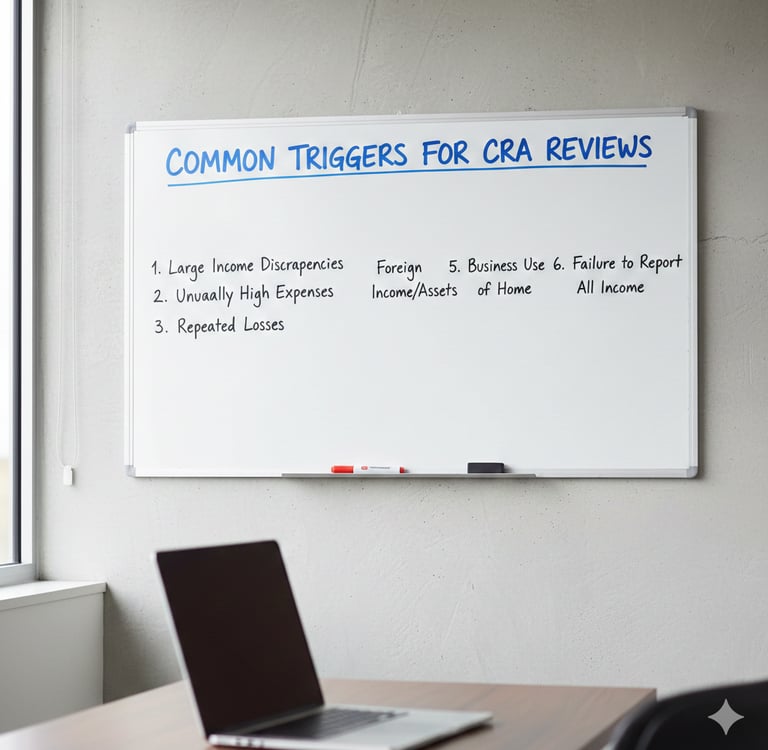
Common Triggers for CRA Reviews: What Canadians Should Know
When you file your taxes, you expect the process to go smoothly. But sometimes, the Canada Revenue Agency (CRA) decides to take a closer look. A CRA review doesn’t always mean you did something wrong—however, certain situations and filing patterns can increase the chance of being selected.
In this article, we break down the most common triggers for CRA reviews and how you can reduce your risk with proper documentation and accurate reporting.
1. Large or Unusual Changes Compared to Previous Years
The CRA compares your tax return with your past filings. If something stands out, it may prompt a review.
Common examples include:
A sudden spike in income
A large drop in reported income
Significant increases in deductions or credits
New types of claims you’ve never filed before
Consistency matters. If you have legitimate changes, always keep supporting documents.
2. High Claims for Deductions or Credits
The CRA pays special attention to unusually high claims, especially for deductions that are commonly misused.
Areas often reviewed:
Employment expenses
Medical expenses
Tuition credits
Moving expenses
Business-related deductions
If your claims fall far above average, expect the CRA to ask for receipts or proof.
3. Self-Employment Income and Business Expenses
Individuals who run a business or do freelance work are more likely to be reviewed. The CRA wants to ensure business expenses are legitimate and reasonable.
Red flags include:
High expense-to-income ratio
Claiming personal expenses as business expenses
Cash-based businesses
Missing invoices or unclear bookkeeping
Good recordkeeping is essential if you’re self-employed.
4. Home Office and Vehicle Expense Claims
Since the pandemic, home office claims have increased—and so has CRA scrutiny.
The CRA often reviews:
Home office size vs. home size
Reasonableness of utilities and rent claims
Vehicle logbooks for mileage claims
Whether you qualify based on work-from-home requirements
Even small errors can trigger a review.
5. Discrepancies Between Employer/Bank Slips and Your Return
The CRA matches your T4s, T5s, and other tax slips with your return using automated systems.
A review may be triggered if:
You forget to include a slip
Information doesn’t match what your employer or bank submitted
There are errors in reported amounts
Always double-check your tax slips before filing.
6. Random Selection
Not all CRA reviews are triggered by a specific issue. Some are simply random checks done to maintain compliance across Canada. Even if nothing is wrong, you may be selected.
Being prepared with proper documentation helps the process go smoothly.
7. Rental Income Reporting Issues
Rental income is another area where reporting mistakes are common.
CRA may review if:
Rental income seems too low
Expense claims (such as repairs or mortgage interest) are unusually high
Capital cost allowance (CCA) appears excessive
Accurate records and receipts are key to avoiding problems.
8. Repeated Errors or Previous CRA Reviews
If you’ve been reviewed before and the CRA found issues, future returns may face stricter scrutiny.
Examples include:
Filing late
Frequent corrections
Past disallowed deductions
Consistency and accuracy help build trust with the CRA over time.
How to Reduce the Chances of a CRA Review
Here are practical steps to avoid unnecessary scrutiny:
Keep receipts and documentation for at least six years
Report all income accurately
Only claim deductions you qualify for
Use professional tax services if unsure
Avoid rounding numbers—use exact amounts
Review your return before submitting
A clean, organized tax return is your best defense.
Final Thoughts
A CRA review can be stressful, but knowing the common triggers helps you file confidently and avoid mistakes that could delay your refund. If you’re unsure about certain claims or need support during a CRA review, professional guidance can make the process much smoother.
TiKi Tax
© 2025. All rights reserved.