
GST Filing Guide for Small Businesses in Canada
Learn this GST filing guide for small businesses to understand GST/HST registration, filing requirements, CRA deadlines, and how to stay compliant.
7/22/20266 min read
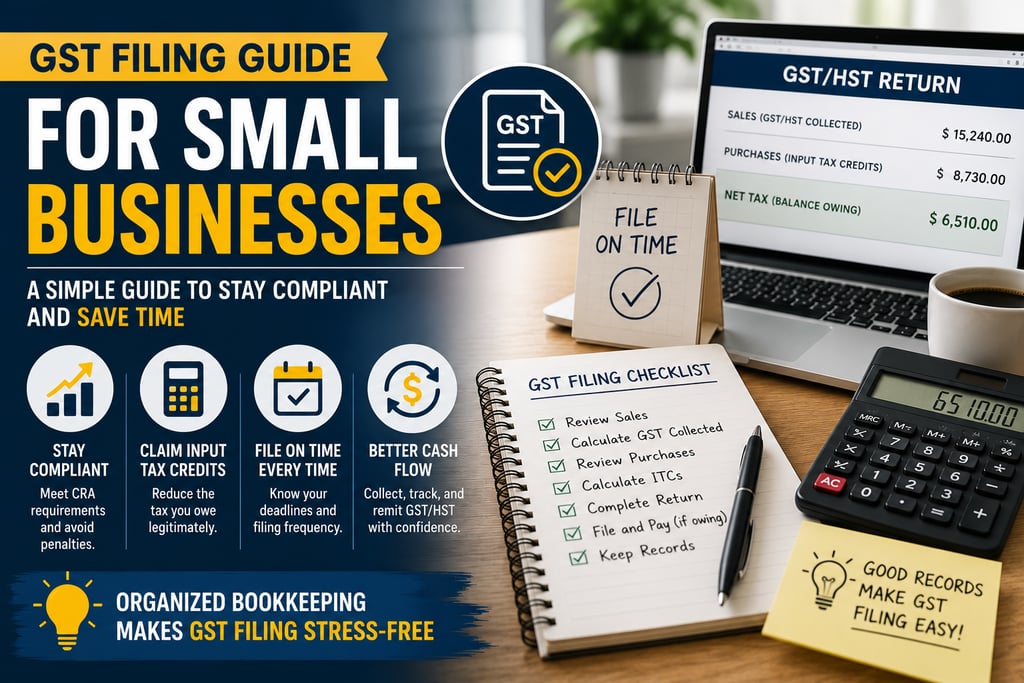
For many Canadian entrepreneurs, GST filing can feel confusing, especially during the first few years of running a business. Understanding your responsibilities early helps you avoid costly mistakes, stay compliant with Canada Revenue Agency (CRA) requirements, and maintain healthy financial records. Whether you're a sole proprietor, contractor, or incorporated business, knowing when and how to file your GST returns is essential.
This GST filing guide for small businesses explains the basics of GST/HST, who needs to register, and how the filing process works. With organized bookkeeping and a consistent filing routine, businesses can reduce stress, improve cash flow management, and prepare for tax season with confidence.
What Is GST Filing?
GST filing is the process of reporting the Goods and Services Tax (GST) or Harmonized Sales Tax (HST) that your business has collected from customers and the GST/HST you have paid on eligible business expenses. Businesses registered for GST/HST must submit regular returns to the CRA, even if there is little or no business activity during the reporting period.
Filing accurate GST returns ensures your business remains compliant with Canadian tax laws while helping you claim eligible tax credits that reduce the amount of tax you owe.
What Is GST/HST?
GST is a federal consumption tax that applies to most goods and services sold in Canada. In some provinces, GST is combined with provincial sales tax into a Harmonized Sales Tax (HST).
Depending on where your business operates, you may charge:
GST
HST
Or another applicable sales tax
Businesses are responsible for collecting the appropriate tax from customers and remitting it to the CRA.
Who Collects GST?
Once a business is registered for GST/HST, it generally collects the applicable tax on taxable goods and services provided to customers.
The tax collected does not belong to the business. Instead, it is held temporarily until it is reported and remitted to the CRA according to the assigned filing schedule.
Maintaining accurate bookkeeping records helps ensure the correct amount is reported.
Why Businesses Must File GST Returns
GST returns allow businesses to report:
GST/HST collected from customers
GST/HST paid on eligible business expenses
Input Tax Credits (ITCs)
Net tax payable or refundable
Even if no GST is collected during a reporting period, many registered businesses are still required to submit a return.
CRA Requirements
The CRA requires businesses to maintain accurate records supporting every GST/HST return.
These records should include:
Sales invoices
Purchase invoices
Expense receipts
Bank statements
GST/HST calculations
Financial records
Keeping organized documentation makes GST filing faster and helps businesses respond if the CRA requests additional information.
Who Needs to Register for GST/HST?
Not every business must register immediately. Registration requirements depend on the size of your business, the type of activities you perform, and your annual taxable revenue.
Understanding these rules helps businesses remain compliant while avoiding unnecessary penalties.
Small Supplier Rules
Many new businesses begin as small suppliers.
Generally, if your worldwide taxable revenue remains below the CRA's small supplier threshold, GST/HST registration may not be mandatory.
However, it's important to monitor your revenue regularly because registration requirements can change as your business grows.
GST Registration Threshold
Once your business exceeds the CRA registration threshold, registering for GST/HST becomes mandatory.
After registration, your business is generally required to:
Charge GST/HST on taxable sales
Maintain accurate GST records
File GST/HST returns
Remit taxes collected to the CRA
Failing to register when required may result in penalties and interest.
Voluntary Registration
Some businesses choose to register voluntarily before reaching the registration threshold.
Voluntary registration may provide benefits such as:
Claiming Input Tax Credits (ITCs)
Presenting a more established business image
Preparing for future business growth
Simplifying tax management as revenue increases
Whether voluntary registration is beneficial depends on your business activities and long-term plans.
Businesses That Must Register
Registration is generally required for many businesses that exceed the CRA threshold, including:
Sole proprietors
Partnerships
Incorporated businesses
Contractors
Self-employed professionals
Growing small businesses
If you're unsure whether your business should register, seeking professional advice can help you understand your obligations.
How to File a GST Return
Filing a GST return becomes much easier when your bookkeeping is organized throughout the year. Rather than scrambling to gather receipts before the deadline, businesses with accurate financial records can complete the process efficiently and with greater confidence.
Gather Your Bookkeeping Records
Before preparing your return, collect all relevant financial information, including:
Sales records
Customer invoices
Purchase receipts
Expense records
Bank statements
Previous GST/HST filings
Complete bookkeeping ensures your GST calculations are based on accurate information.
Calculate GST Collected
Determine the total amount of GST/HST your business collected from customers during the reporting period.
Review:
Sales invoices
Point-of-sale records
Online sales
Service income
Accurate sales records reduce the risk of reporting errors.
Calculate Input Tax Credits (ITCs)
Next, calculate the GST/HST paid on eligible business purchases and expenses.
Common examples include:
Office supplies
Professional services
Business equipment
Software subscriptions
Vehicle expenses (where applicable)
Claiming eligible Input Tax Credits can reduce the amount of GST you owe.
Complete and Submit Your GST Return
Using your bookkeeping records, complete your GST/HST return with the required information.
Before submitting, review the return carefully to confirm:
Sales totals are accurate
ITCs are correctly calculated
Supporting records are complete
Figures match your bookkeeping records
After filing, remit any balance owing to the CRA by the required deadline to avoid interest charges and penalties.\
Common GST Filing Mistakes to Avoid
Even well-managed businesses can make mistakes when preparing GST/HST returns. Most errors happen because financial records are incomplete or businesses wait until the filing deadline to organize their bookkeeping. Recognizing these common mistakes can help you avoid penalties, interest charges, and unnecessary stress.
Missing GST Filing Deadlines
One of the most common mistakes is filing GST/HST returns after the CRA deadline.
Late filing can result in:
Interest charges on unpaid balances
Late filing penalties
Additional CRA correspondence
Increased administrative work
Marking filing dates on your calendar and maintaining updated bookkeeping records throughout the year makes it much easier to submit returns on time.
Poor Bookkeeping
Accurate GST filing depends on accurate bookkeeping.
If transactions are missing or recorded incorrectly, your GST/HST return may also contain errors.
Poor bookkeeping often leads to:
Incorrect sales totals
Missing expenses
Miscalculated GST payable
Additional work before filing
Maintaining current financial records reduces the likelihood of filing mistakes.
Incorrect Input Tax Credit (ITC) Claims
Input Tax Credits (ITCs) allow businesses to recover GST/HST paid on eligible business purchases.
However, businesses sometimes:
Claim ineligible expenses
Miss eligible ITCs
Lack supporting documentation
Record incorrect GST amounts
Reviewing receipts carefully and keeping complete records helps ensure ITCs are claimed accurately.
Forgetting Business Expenses
Some business owners focus only on sales and overlook expenses when preparing GST returns.
Missing eligible expenses can reduce available ITCs, resulting in a higher GST balance owing than necessary.
Keeping receipts organized throughout the year helps maximize eligible claims.
Filing Inaccurate Returns
Errors in GST/HST returns may include:
Incorrect sales figures
Mathematical mistakes
Missing transactions
Incorrect reporting periods
Submitting inaccurate returns may require amendments and could result in CRA reviews or reassessments.
Reviewing your return before submission helps improve accuracy and reduce compliance risks.
How Professional GST Filing Services Help
Many small business owners prefer to outsource GST/HST filing so they can focus on running their businesses. Professional support reduces administrative burdens while improving accuracy and compliance.
Accurate GST Calculations
Experienced professionals calculate GST/HST using complete bookkeeping records, reducing the risk of reporting errors and ensuring returns reflect accurate financial information.
Improved CRA Compliance
Professional GST filing services help businesses meet CRA reporting requirements by:
Filing returns on time
Maintaining organized documentation
Tracking filing deadlines
Ensuring accurate reporting
This proactive approach helps reduce the likelihood of penalties and interest.
Save Valuable Time
Preparing GST returns can be time-consuming, particularly for businesses with frequent transactions.
Professional support allows owners to spend more time:
Serving customers
Managing operations
Growing the business
Planning for the future
Better Financial Records
GST filing works best when bookkeeping is accurate.
Professional bookkeepers help businesses:
Organize financial records
Track GST collected and paid
Prepare monthly reports
Improve financial visibility
These records also simplify year-end tax preparation.
Less Stress During Tax Season
When bookkeeping and GST reporting are managed consistently throughout the year, tax season becomes much less stressful.
Business owners gain confidence knowing their records are complete and filing obligations are under control.
How TiKi Tax Helps Small Businesses
Managing GST/HST responsibilities can be challenging, especially for entrepreneurs balancing sales, operations, and business growth. Having professional support helps ensure your financial records stay organized and your GST obligations are met accurately.
At TiKi Tax, we help businesses across Kelowna, Penticton, West Kelowna, Summerland, Peachland, Oliver, Osoyoos, and Lake Country simplify GST/HST filing through reliable bookkeeping and personalized tax support.
Our services include:
GST/HST filing
Professional bookkeeping
Financial statement preparation
Payroll support
Corporate and personal tax services
CRA-compliant bookkeeping processes
Using modern cloud bookkeeping solutions, we help business owners maintain accurate records throughout the year, making GST filing faster, easier, and more accurate. Our personalized approach ensures every client receives practical guidance based on their unique business needs.
Conclusion
Following a GST filing guide for small businesses helps business owners understand their obligations, stay compliant with CRA requirements, and avoid unnecessary penalties. By maintaining accurate bookkeeping, tracking GST/HST collected and paid, and filing returns on time, businesses can improve financial management and reduce stress throughout the year.
Whether you're registering for GST/HST for the first time or looking to streamline your reporting process, consistent record keeping is the key to accurate filing. Professional guidance can also help ensure eligible Input Tax Credits are claimed and reporting obligations are met with confidence.
If your business needs assistance with GST/HST filing or ongoing bookkeeping support, TiKi Tax provides reliable, CRA-compliant services tailored to businesses across British Columbia. Contact our team to learn how we can simplify your GST filing and help keep your business financially organized.
TiKi Tax
© 2025. All rights reserved.