
Monthly Bookkeeping Checklist for Canadian Businesses
Follow this monthly bookkeeping checklist to keep your Canadian business organized, improve cash flow, stay CRA compliant, and simplify tax season with confidence.
7/20/20266 min read

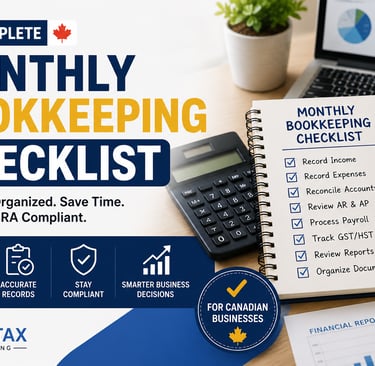
Bookkeeping isn't something that should only happen at tax time. For Canadian businesses, keeping financial records updated every month is one of the best ways to maintain healthy cash flow, meet Canada Revenue Agency (CRA) requirements, and make informed business decisions. Waiting until year-end to organize receipts and reconcile accounts often leads to unnecessary stress, missed deductions, and inaccurate financial reporting.
Following a monthly bookkeeping checklist helps you stay on top of your finances throughout the year. Whether you're a small business owner, contractor, entrepreneur, or self-employed professional, completing a few essential bookkeeping tasks each month can save time, reduce costly mistakes, and make tax season far less overwhelming.
In this guide, we'll walk through the key bookkeeping tasks every Canadian business should complete each month and explain how consistent bookkeeping supports long-term business success.
Why Monthly Bookkeeping Matters
Bookkeeping is more than recording numbers. It provides the financial foundation that supports every aspect of your business. Completing your bookkeeping monthly keeps your financial information accurate and allows you to identify issues before they become expensive problems.
Better Cash Flow Management
Cash flow is one of the most important indicators of business health.
Regular monthly bookkeeping allows you to:
Monitor incoming customer payments
Track outgoing expenses
Identify overdue invoices
Plan upcoming business expenses
Forecast seasonal cash flow changes
When you know exactly where your money is going, it's much easier to make confident financial decisions.
Accurate Financial Records
Accurate bookkeeping ensures every transaction is recorded correctly throughout the year.
Maintaining organized records helps you:
Reduce bookkeeping errors
Monitor profitability
Prepare financial statements
Track business performance
Support year-end accounting
Reliable financial information also gives you confidence when applying for financing or planning future investments.
Stay CRA Compliant
Canadian businesses have ongoing reporting responsibilities, including GST/HST filings, payroll remittances, and maintaining proper financial records.
Consistent bookkeeping helps ensure:
Income and expenses are properly categorized
Supporting documents are organized
GST/HST records remain accurate
Payroll information is complete
Filing deadlines are easier to meet
Keeping your books current significantly reduces stress during tax season and lowers the risk of penalties.
Easier Tax Preparation
When bookkeeping is updated every month, tax season becomes much more manageable.
Instead of sorting through months of receipts and invoices, your accountant receives organized financial records that are ready for preparing tax returns and financial statements.
Better Business Decisions
Business owners rely on financial information to make important decisions.
Regular bookkeeping helps answer questions like:
Is my business profitable?
Can I afford to hire another employee?
Which expenses are increasing?
Is my cash flow improving?
Should I invest in new equipment?
Accurate financial reports provide the information needed to make strategic decisions with confidence.
Monthly Bookkeeping Checklist
Following a consistent bookkeeping checklist each month keeps your financial records organized and helps prevent small issues from becoming major problems. While every business is unique, the following tasks should be part of every monthly bookkeeping routine.
1. Record All Income
Ensure every source of business income is recorded accurately.
Include:
Customer payments
Sales revenue
Service income
Online payments
Bank deposits
Recording income consistently provides an accurate picture of your monthly revenue.
2. Record All Expenses
Track every business expense as it occurs.
Common expense categories include:
Office supplies
Marketing
Utilities
Travel
Vehicle expenses
Software subscriptions
Professional services
Accurate expense tracking helps control spending while maximizing eligible tax deductions.
3. Reconcile Bank Accounts
Compare your accounting records with your monthly bank statements.
Bank reconciliation helps identify:
Missing transactions
Duplicate entries
Banking errors
Outstanding payments
Incorrect balances
Reconciling accounts monthly improves the accuracy of your financial records.
4. Reconcile Credit Card Statements
Business credit cards should also be reconciled every month.
This helps ensure:
Every purchase is recorded
Interest charges are tracked
Duplicate expenses are avoided
Credit card balances remain accurate
Keeping credit card records current prevents bookkeeping errors from accumulating.
5. Review Accounts Receivable
Monitor outstanding customer invoices.
Ask yourself:
Which invoices are overdue?
Which customers require follow-up?
Are payment terms being met?
Following up on overdue invoices improves cash flow and reduces outstanding balances.
6. Review Accounts Payable
Keep track of supplier invoices and upcoming payment deadlines.
Review:
Outstanding vendor invoices
Upcoming bills
Scheduled payments
Supplier balances
Paying suppliers on time helps maintain positive business relationships while avoiding unnecessary late fees.
7. Process Payroll
If your business has employees, ensure payroll is completed accurately and on schedule.
Monthly payroll tasks include:
Employee wages
CPP and EI deductions
Vacation pay
Payroll remittances
Payroll record updates
Accurate payroll supports both employee satisfaction and CRA compliance.
8. Track GST/HST
Businesses registered for GST/HST should review taxes collected and paid every month.
Monthly tracking helps:
Monitor GST/HST collected
Record Input Tax Credits
Prepare for future filings
Reduce filing errors
Keeping GST/HST records current makes filing much simpler.
9. Review Cash Flow
Evaluate how money moved through your business during the month.
Review:
Cash inflows
Operating expenses
Upcoming obligations
Available working capital
Understanding your cash flow helps prevent financial surprises.
10. Generate Monthly Financial Reports
Finish each month by reviewing your financial reports.
Key reports include:
Profit and Loss Statement
Balance Sheet
Cash Flow Statement
Accounts Receivable Report
Accounts Payable Report
These reports provide valuable insights into your business performance and help you identify opportunities for improvement before the next month begins.
Common Monthly Bookkeeping Mistakes to Avoid
Even business owners with the best intentions can develop bookkeeping habits that lead to unnecessary stress, inaccurate financial reports, and compliance issues. Identifying these common mistakes early can help your business stay organized and financially healthy.
Missing or Losing Receipts
Receipts are essential for supporting business expenses and claiming eligible tax deductions.
Common problems include:
Paper receipts getting lost
Missing digital invoices
Unorganized expense records
Incomplete documentation
A simple solution is to scan or upload receipts as soon as purchases are made. Cloud accounting software makes it easy to store documents securely and access them whenever they're needed.
Falling Behind on Bookkeeping
Many business owners postpone bookkeeping until the end of the quarter—or even until tax season.
Unfortunately, delayed bookkeeping often results in:
Missing transactions
Incorrect financial reports
Cash flow uncertainty
Rushed tax preparation
Increased stress
Completing your bookkeeping every month keeps your financial records current and significantly reduces year-end workloads.
Forgetting to Track GST/HST
Businesses registered for GST/HST should monitor taxes collected and paid throughout the year rather than waiting until filing deadlines approach.
Monthly GST/HST tracking helps you:
Prepare accurate returns
Monitor Input Tax Credits
Reduce filing errors
Avoid unexpected tax liabilities
Keeping GST/HST records current also makes it easier to respond to CRA requests if needed.
Not Reconciling Bank Accounts
Skipping monthly bank reconciliations is one of the most common bookkeeping mistakes.
Without reconciliation, it's difficult to identify:
Duplicate transactions
Missing deposits
Banking errors
Incorrect account balances
Reconciling your accounts every month ensures your financial records remain accurate.
Ignoring Financial Reports
Many business owners generate reports but rarely review them.
Your monthly reports provide valuable information about:
Revenue trends
Operating expenses
Cash flow
Profitability
Business performance
Reviewing these reports regularly helps you identify opportunities and address financial issues before they become larger problems.
How Professional Bookkeeping Services Can Help
As your business grows, bookkeeping becomes more detailed and time-consuming. Working with experienced professionals allows you to focus on running your business while knowing your financial records are accurate and up to date.
Professional bookkeeping services provide far more than transaction recording. They offer ongoing financial support that helps businesses improve organization, reduce errors, and make informed decisions.
Benefits include:
Accurate financial record keeping
Regular bank reconciliations
Payroll support
GST/HST tracking
Monthly financial reporting
CRA-compliant bookkeeping practices
Cloud bookkeeping solutions for secure access to your records
At TiKi Tax, we help businesses across British Columbia simplify their bookkeeping with personalized support tailored to their needs. Our experienced team works with entrepreneurs, contractors, startups, and growing businesses to keep financial records organized throughout the year.
By combining modern cloud bookkeeping technology with responsive local service, TiKi Tax helps business owners spend less time managing paperwork and more time growing their businesses.
Monthly Bookkeeping Tips for Small Businesses
Following a consistent monthly routine makes bookkeeping faster, more accurate, and far less stressful.
Schedule Bookkeeping Time Every Month
Treat bookkeeping like any other important business meeting.
Set aside dedicated time each month to:
Update transactions
Review financial reports
Reconcile accounts
Check cash flow
Consistency prevents bookkeeping from becoming overwhelming.
Store Receipts Digitally
Paper receipts fade and are easily misplaced.
Using cloud accounting software or secure digital storage allows you to:
Organize receipts
Search documents quickly
Reduce paper clutter
Share records with your bookkeeper or accountant
Separate Business and Personal Finances
Maintaining separate bank accounts and credit cards for business transactions improves bookkeeping accuracy and simplifies tax preparation.
Mixing personal and business expenses creates unnecessary confusion and increases the risk of reporting errors.
Review Financial Reports Every Month
Take time to review your:
Profit and Loss Statement
Balance Sheet
Cash Flow Statement
Understanding these reports helps you monitor business performance and make informed financial decisions.
Stay Ahead of CRA Deadlines
Waiting until the last minute often leads to unnecessary stress.
Keeping your books updated every month makes it much easier to:
Prepare GST/HST filings
Process payroll
Organize tax records
Meet CRA deadlines
Staying proactive throughout the year helps your business remain compliant while avoiding penalties.
Conclusion
Following a monthly bookkeeping checklist is one of the simplest ways to keep your business financially organized and prepared for long-term success. By recording transactions, reconciling accounts, reviewing financial reports, and monitoring cash flow each month, you can improve financial accuracy, simplify tax preparation, and make more confident business decisions.
Consistent bookkeeping also helps reduce stress during tax season and ensures your business remains compliant with CRA requirements throughout the year.
If managing your bookkeeping has become time-consuming or difficult, professional support can make a significant difference. At TiKi Tax, we help businesses across British Columbia stay organized with reliable bookkeeping, payroll support, GST/HST tracking, and personalized financial services tailored to their unique needs.
Contact TiKi Tax today to learn how our professional bookkeeping services can help your business stay organized, compliant, and ready for future growth.
TiKi Tax
© 2025. All rights reserved.