
Should You Consolidate Your Debt? Pros & Cons
Considering debt consolidation? Learn the pros, cons, and key factors to decide whether consolidating your debt is the right financial move for you.
12/4/20252 min read
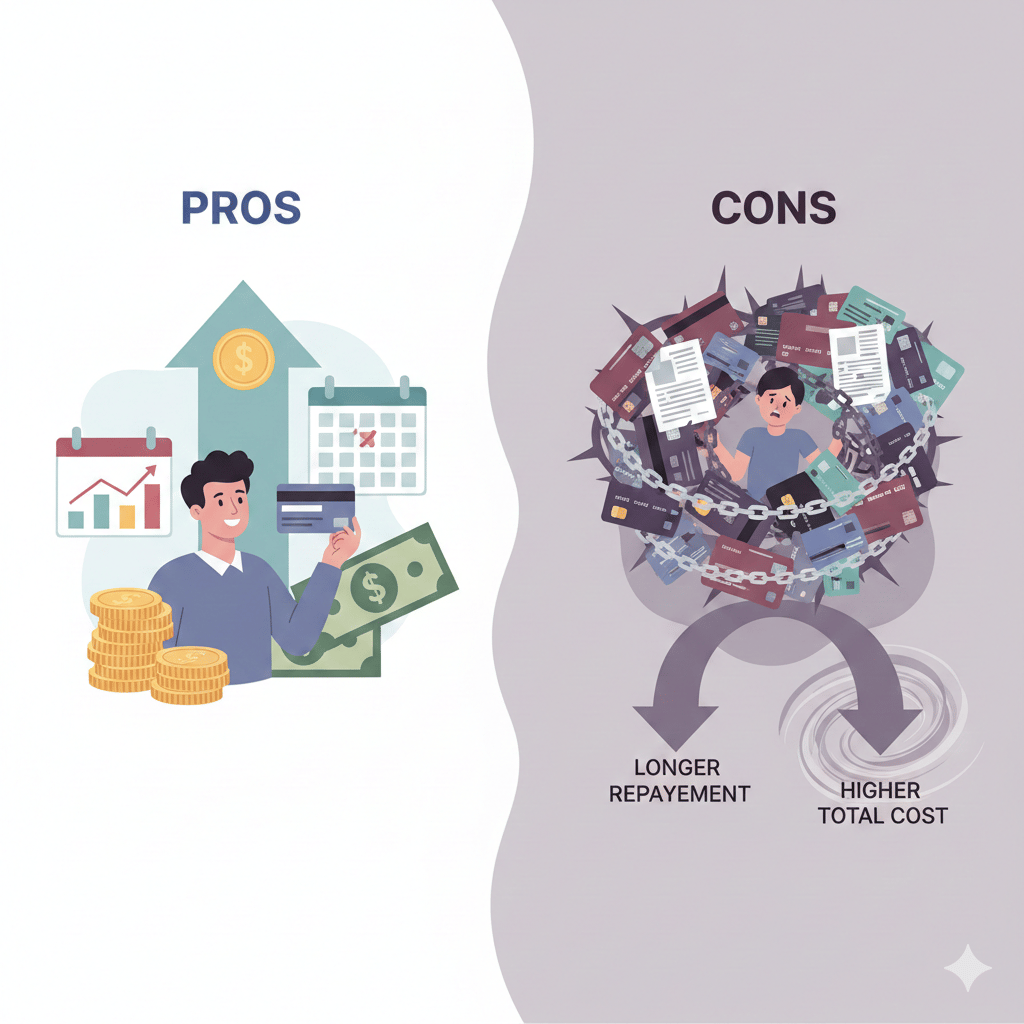
Managing multiple debts can feel overwhelming—especially when each loan comes with different due dates, interest rates, and payment terms. Debt consolidation is a popular strategy that helps simplify your finances by combining multiple debts into a single loan. But is it always the right choice?
In this article, we break down the pros and cons of debt consolidation, when it makes sense, and when you might want to explore other options.
What Is Debt Consolidation?
Debt consolidation is the process of merging multiple debts—such as credit cards, personal loans, or payday loans—into one new loan with a single monthly payment. Ideally, this new loan offers:
A lower interest rate
A longer repayment period
Easier financial management
Common methods include personal loans, balance transfer credit cards, or home equity loans.
The Pros of Debt Consolidation
1. One Simple Monthly Payment
Instead of juggling several due dates and bills, debt consolidation simplifies everything into one predictable payment. This reduces stress and lowers the risk of missed payments.
2. Potentially Lower Interest Rates
If your current debts have high interest rates—especially credit cards—you may qualify for a consolidation loan with a lower rate, helping you save money long-term.
3. Improved Cash Flow
Lower interest or longer repayment terms can reduce your monthly payments, giving you more breathing room in your budget.
4. Faster Debt Repayment
Some consolidation plans are structured to help you pay off debt sooner by focusing on a clear repayment schedule.
5. Can Improve Your Credit Score
Over time, making on-time payments on your new consolidation loan can boost your credit score and show healthy debt management.
The Cons of Debt Consolidation
1. You May Pay More in the Long Run
If your consolidation loan extends your repayment period, your total interest paid may end up being higher—even if the monthly payment is lower.
2. Not Guaranteed Lower Interest
You typically need good credit to qualify for the best rates. If your credit score is low, the new loan might not save you money.
3. Risk of Accumulating New Debt
Many people pay off their credit cards through consolidation but then start using them again, creating a deeper cycle of debt.
4. Fees and Additional Costs
Some consolidation loans come with:
Origination fees
Balance transfer fees
Early repayment penalties
Always review terms carefully.
5. Secured Loans Put Assets at Risk
If you use a home equity loan or another secured loan, you could risk losing your home if you can’t make payments.
When Is Debt Consolidation a Good Idea?
Debt consolidation might be right for you if:
Your credit score qualifies you for a lower interest rate
You struggle to manage multiple monthly payments
You have high-interest credit card debt
You want a clear, structured repayment plan
You’re committed to not increasing your debt again
When You Should Avoid Debt Consolidation
It may not be the right solution if:
You have poor credit and won’t qualify for better rates
Your debt amount is too high to realistically pay off
You don’t have stable income to make monthly payments
You’re using consolidation to avoid addressing spending habits
In these cases, alternatives like credit counselling, debt settlement, or consumer proposals may be more appropriate.
Debt Consolidation Alternatives
If consolidation isn’t suitable, consider:
Debt Management Plans — Work with a credit counsellor to negotiate lower interest.
Debt Settlement — Negotiate with creditors to pay less than owed.
Consumer Proposals (Canada) — Legally reduce your debt through a licensed insolvency trustee.
Budgeting and Financial Coaching — Improve spending habits and create a debt payoff plan.
Final Thoughts
Debt consolidation can be a powerful tool for simplifying your finances, reducing interest costs, and helping you regain control—but it’s not a one-size-fits-all solution. Understanding the pros, cons, and your financial situation is essential before deciding.
TiKi Tax
© 2025. All rights reserved.