
Understanding CRA Guidelines for Claiming Internet, Phone, and Utilities
Learn what internet, phone, and utility expenses you can claim as a self-employed business owner in Canada. Understand CRA rules, home office deductions, and how to calculate business-use percentages.
10/23/20252 phút đọc
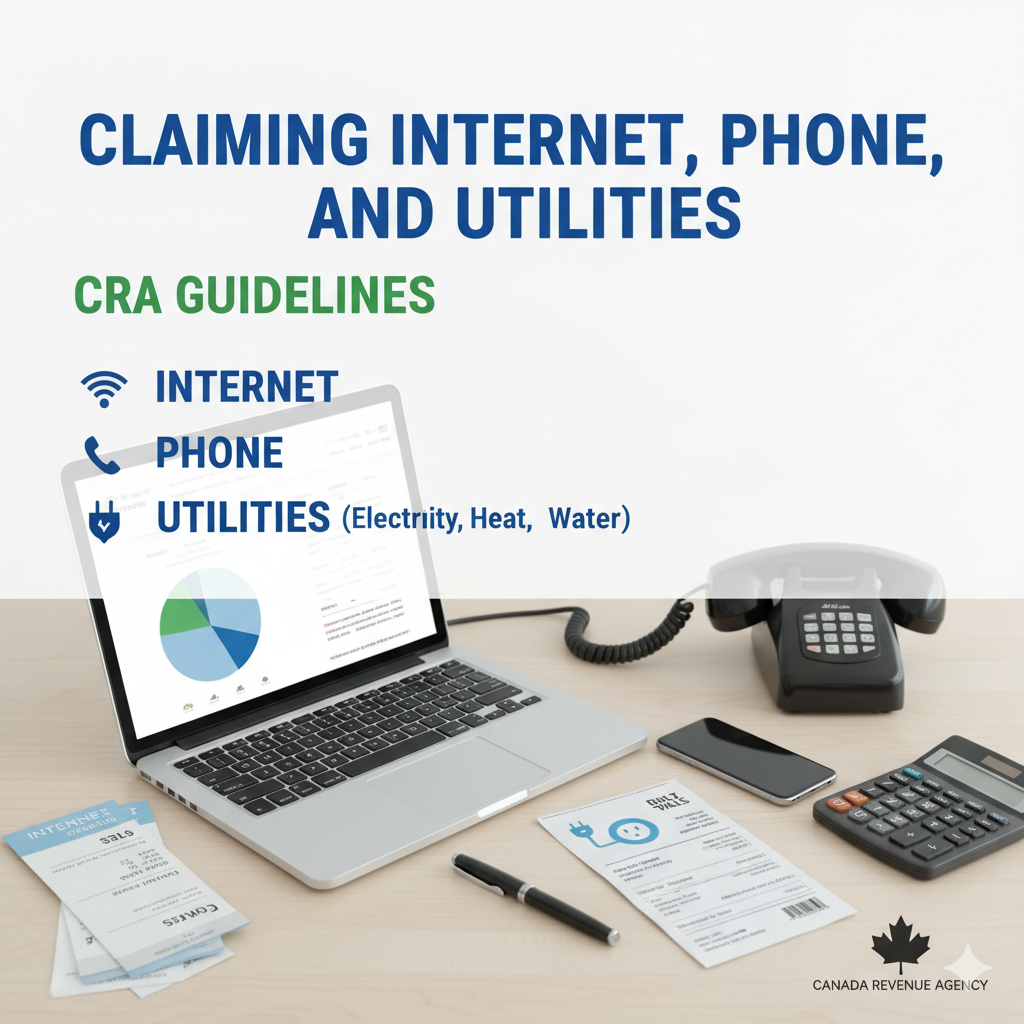
Running a small business or freelancing from home means many of your personal bills — like internet, phone, and utilities — also support your work.
The good news: the Canada Revenue Agency (CRA) allows you to deduct the business-use portion of these costs. The key is knowing what qualifies, how to calculate the right percentage, and how to document it properly.
Let’s break down how it works.
1. Internet Expenses – Claiming the Business Portion
If you use your home internet for business, you can claim a portion of that cost as a deduction.
The CRA only allows you to claim the percentage used for business — not the full bill.
Example:
If your total internet bill is $100/month, and you estimate that 60% of your internet use is for business (emails, client calls, uploading files, etc.), you can claim $60/month as a business expense.
💡 Tip: Keep a record of your business activities online — CRA may ask for justification of your estimate if audited.
2. Phone Expenses – Personal vs. Business Use
You can claim a portion of your cell phone or landline costs if used for business.
If you have one phone for both personal and business use:
Track your business call percentage or use time logs to estimate.
Claim only the business-use share of your total phone plan and add-ons (like data or long-distance).
If you have a dedicated business phone:
You can generally claim 100% of that cost.
📞 Example:
If your total cell phone bill is $80/month and 50% of your calls or data are for business, you can claim $40/month.
3. Utilities – If You Work From Home
If you use a home office for your business, CRA allows you to claim a portion of your home’s utilities as a business expense.
Eligible home office utilities include:
Electricity
Heating and water
Home internet (if not already claimed separately)
The amount you can claim depends on the size of your workspace and how much it’s used for business.
Example:
If your office is 10% of your home’s total space, and you work there full-time, you can claim 10% of your utility costs.
💡 If you rent your home, you can also claim a portion of your rent.
💡 If you own your home, you may be able to claim mortgage interest, property taxes, and insurance proportionally.
4. Documentation Matters
The CRA expects accurate records to back up your claims. Always keep:
Internet and phone bills
Utility invoices
Notes or logs showing how you calculated your business-use percentage
Keeping digital copies is fine — just make sure they’re clear and accessible if the CRA requests them.
5. Common CRA Pitfalls
🚫 Claiming 100% of internet or phone bills when used partly for personal use
🚫 Forgetting to adjust business-use percentage if your work hours or home setup change
🚫 No receipts or records for monthly services
CRA audits often focus on mixed-use expenses like phone and internet, so reasonable estimates and proper documentation are key.
6. Maximize Your Deductions, Stay Compliant
Claiming a portion of your internet, phone, and utilities can reduce your taxable income — as long as you follow CRA’s business-use rules and keep clear records.
At Tiki Tax, we help small business owners and self-employed professionals calculate fair business-use percentages, organize digital receipts, and stay compliant — while ensuring you get every deduction you deserve.
TiKi Tax
© 2025. All rights reserved.